Carving Light
Enfilade of Shifting Light and Shadow
Competition. All materials by the author
Project location: La Paz, Mexico
Materials: Rammed earth, volcanic cement
2024
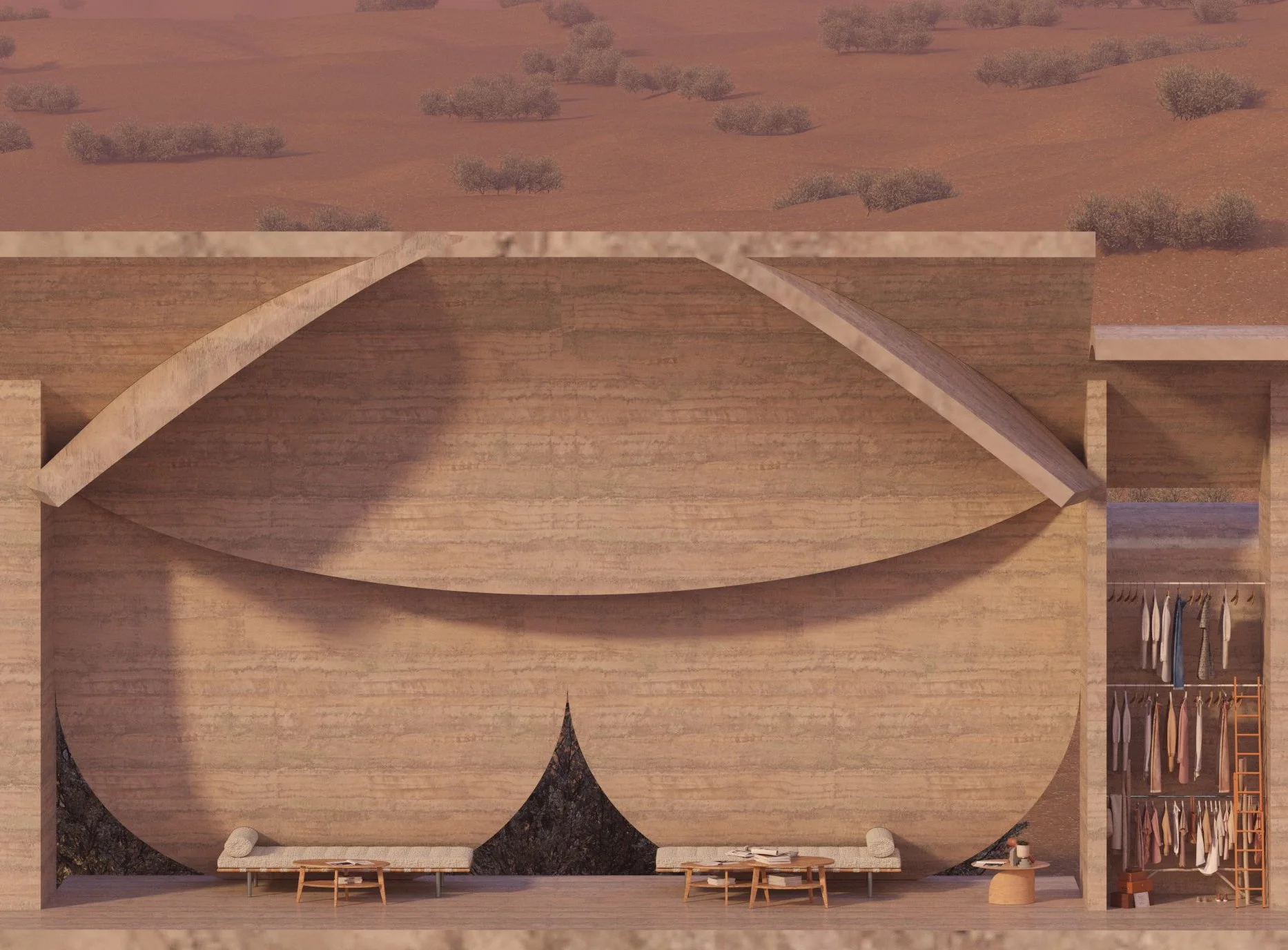
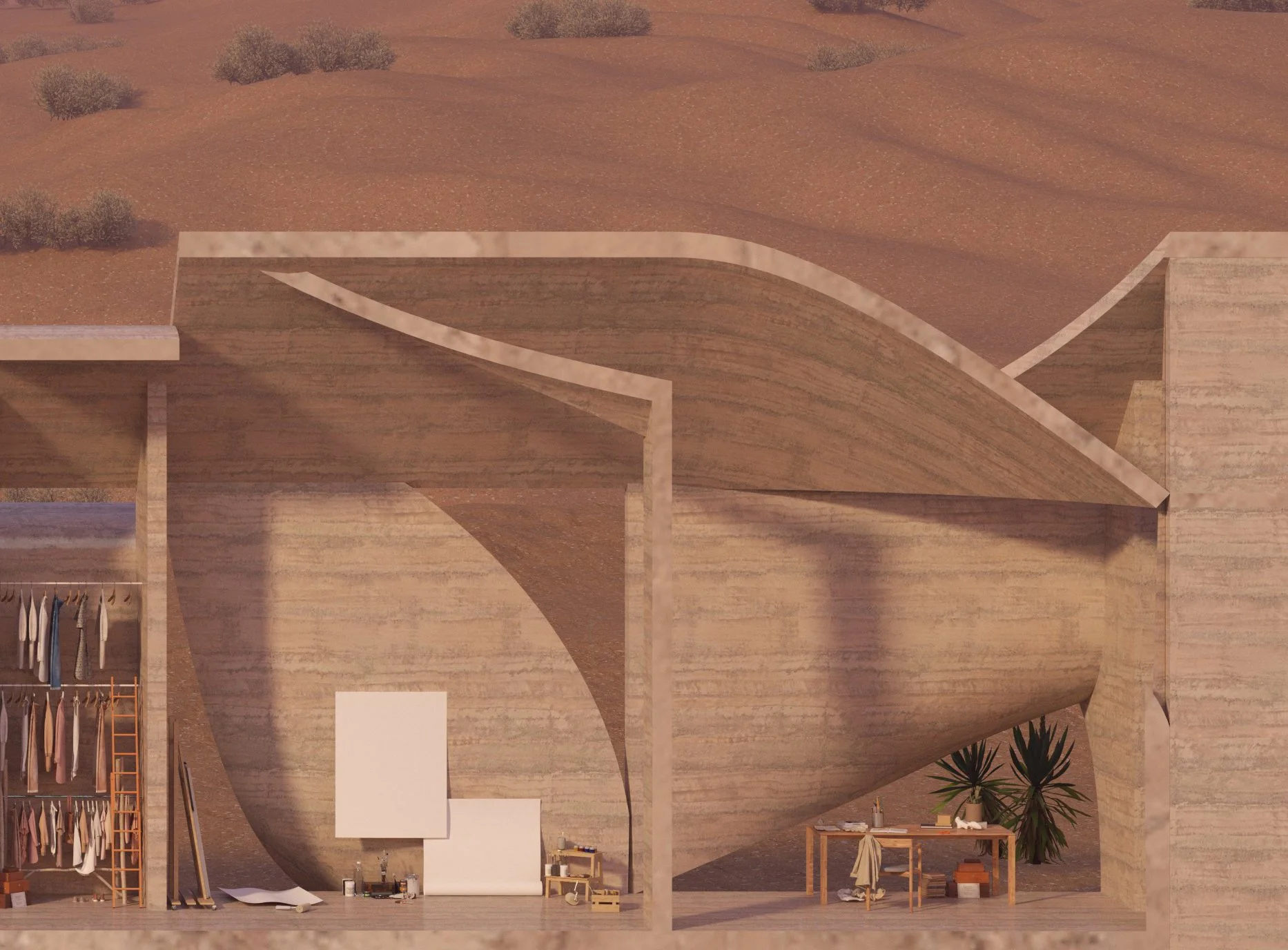
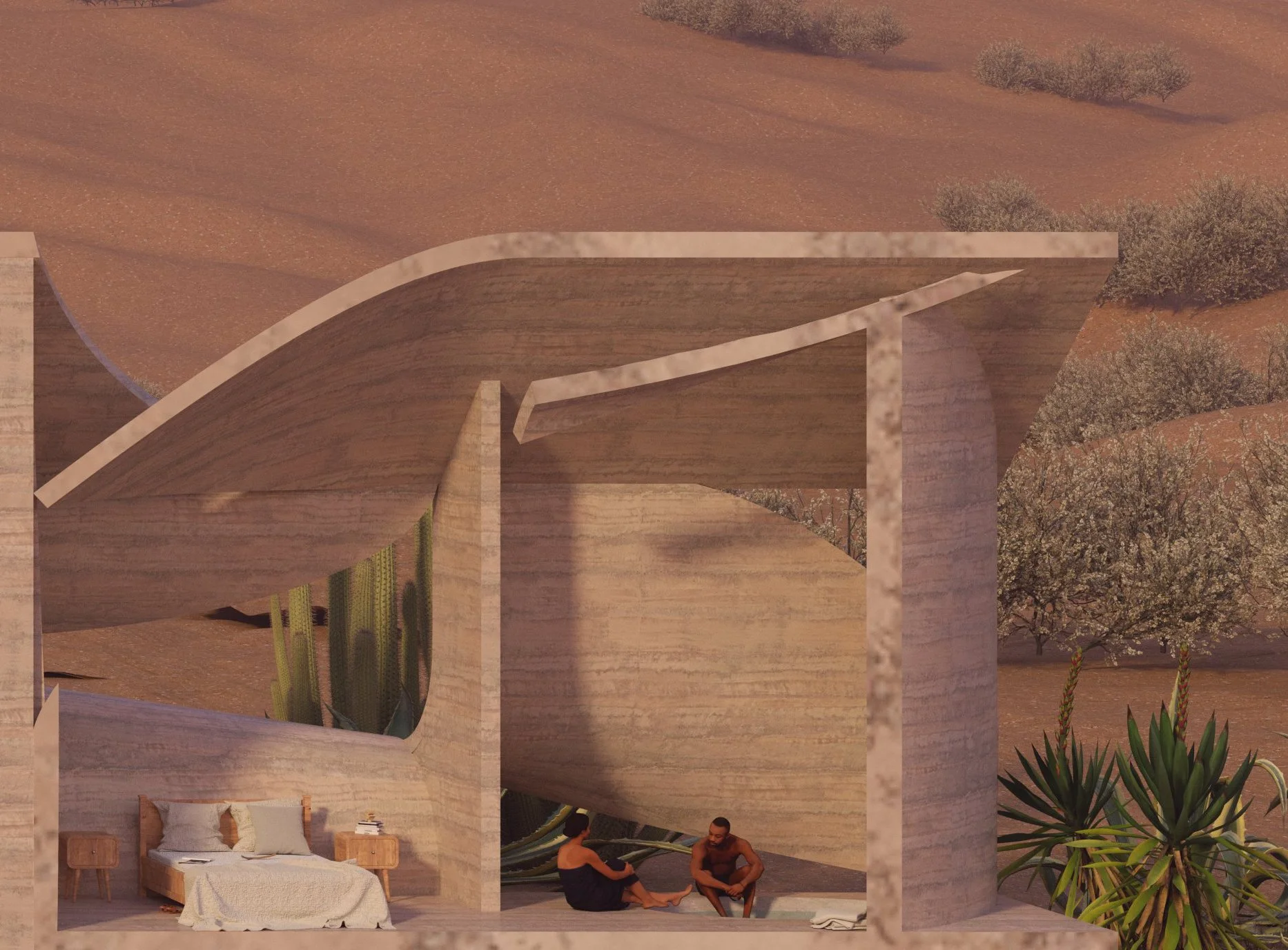
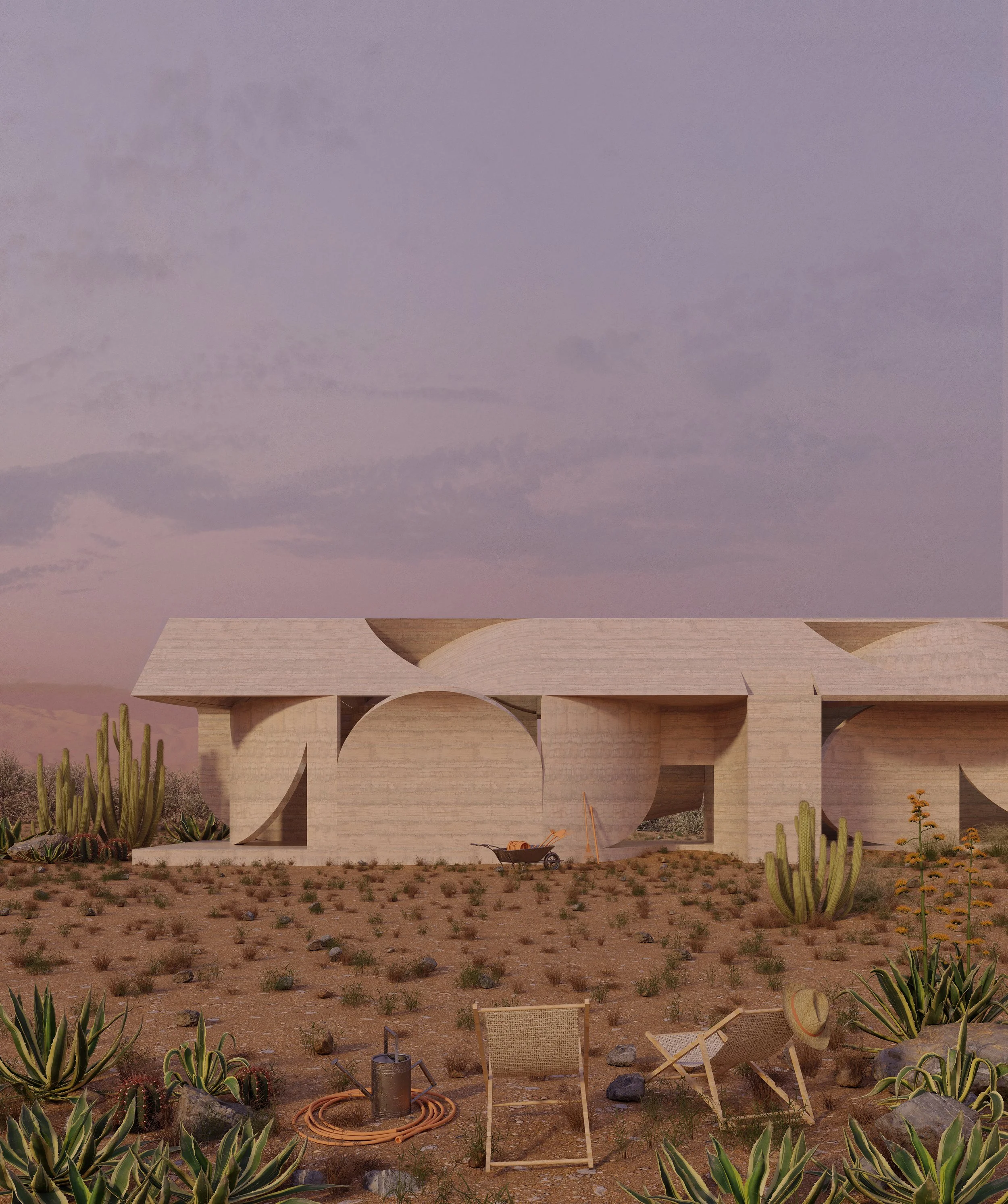
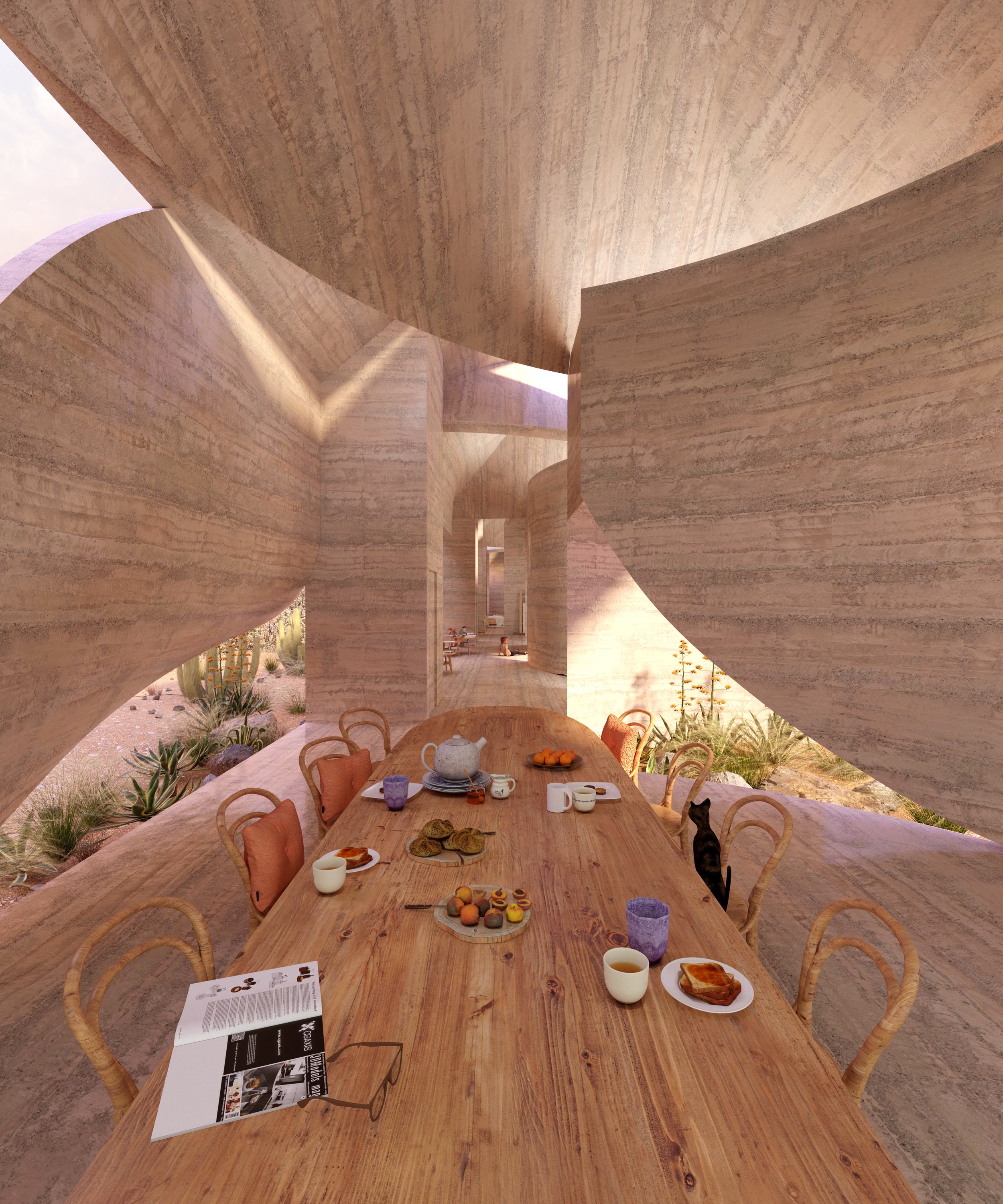
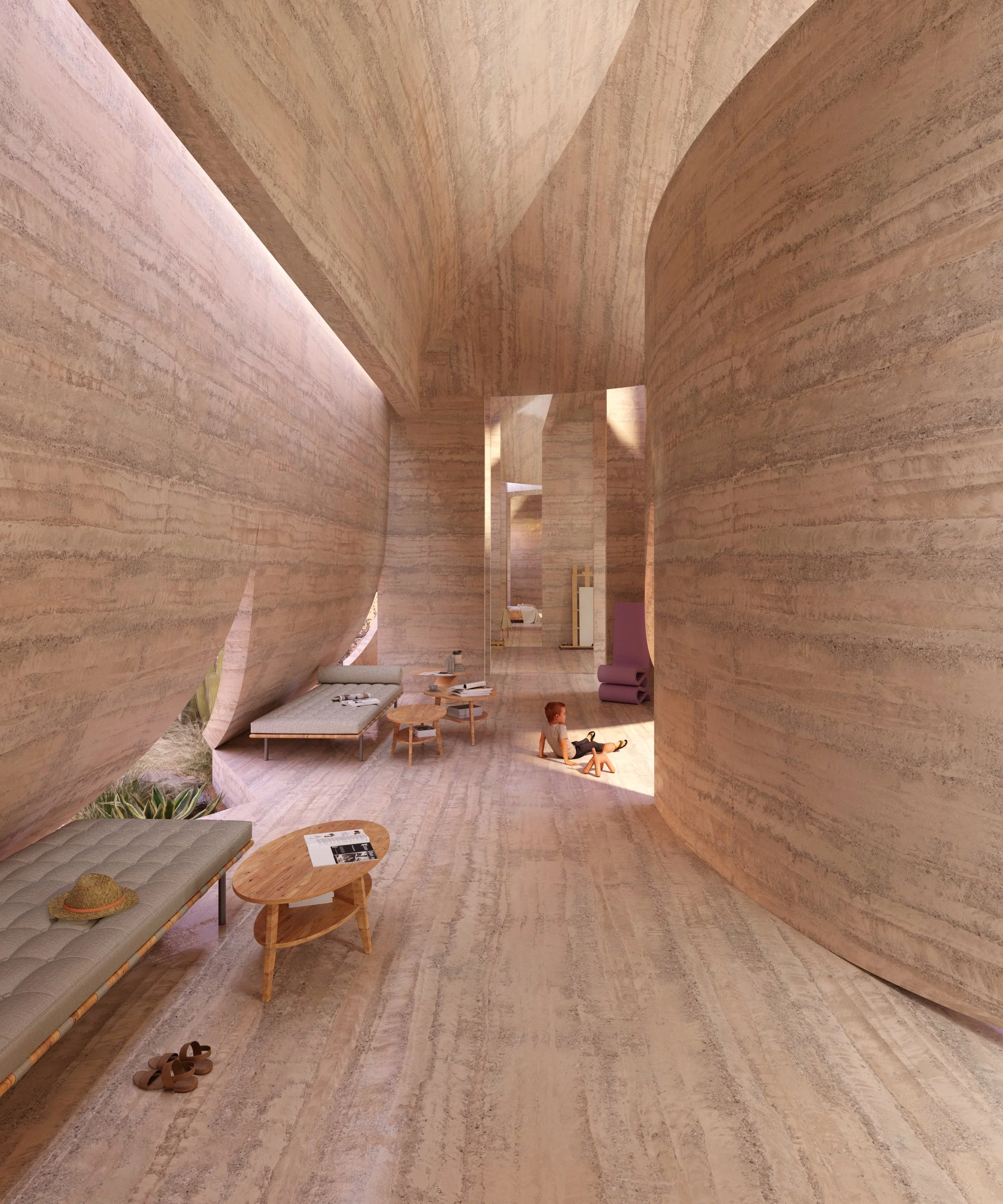
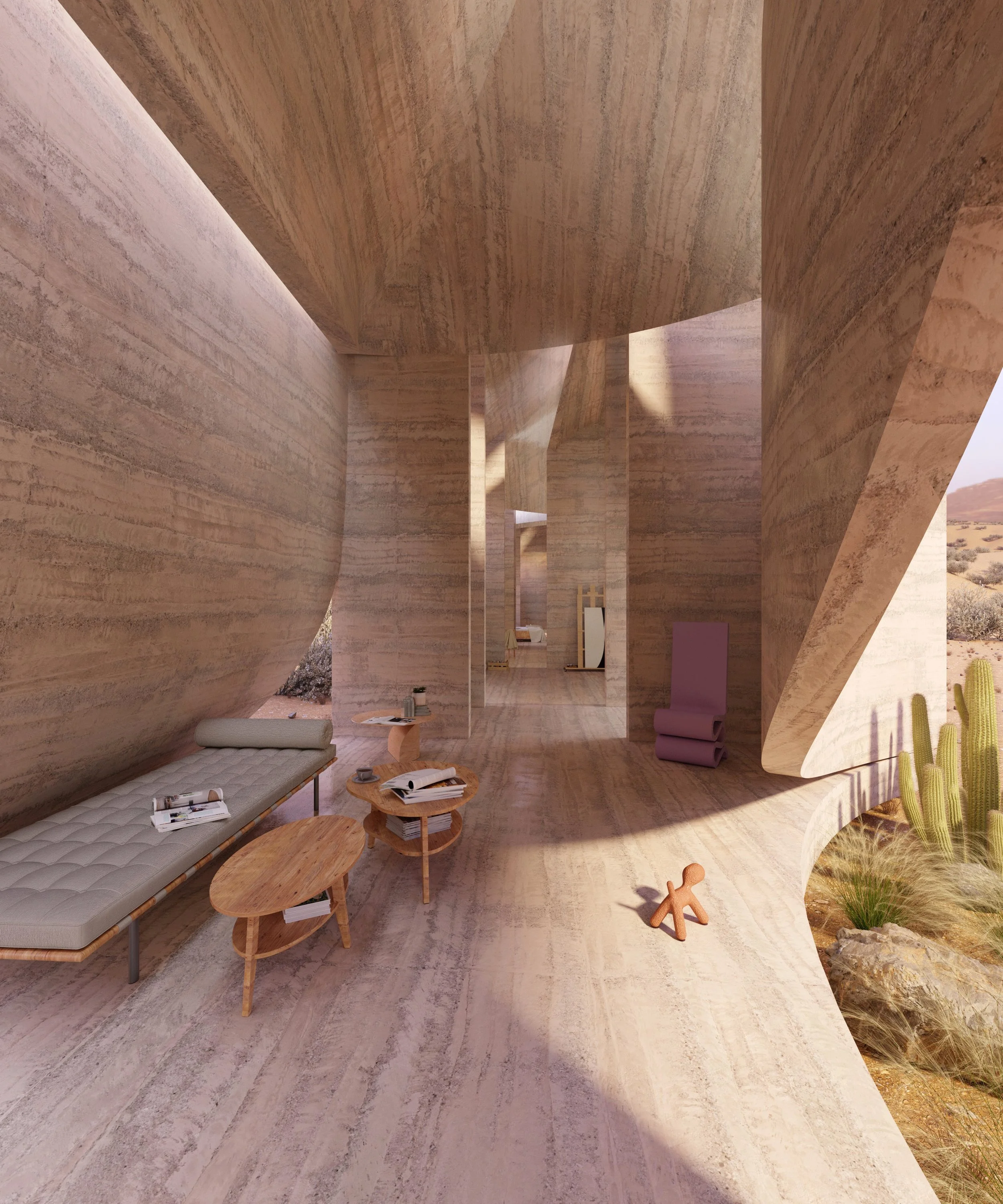
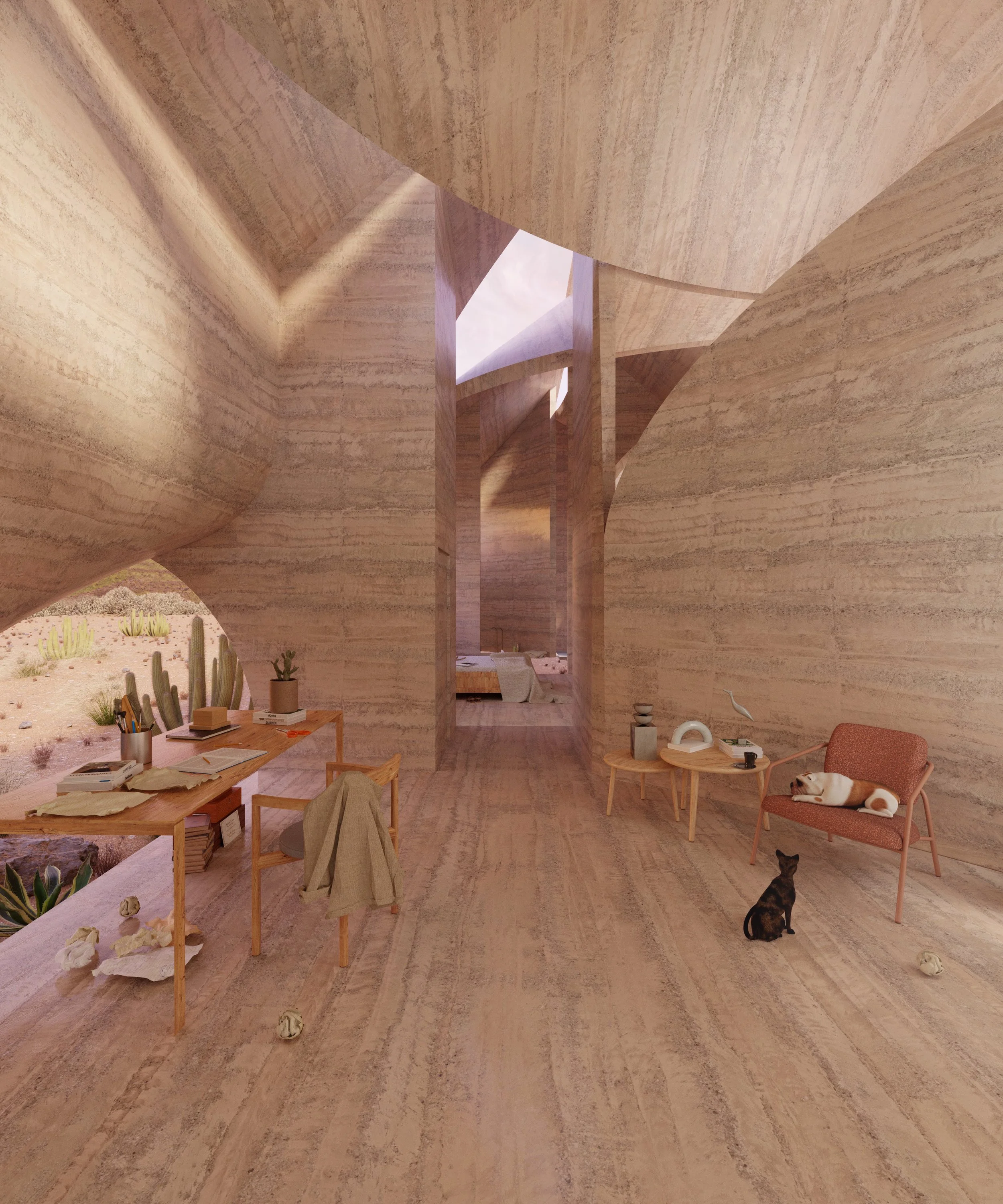
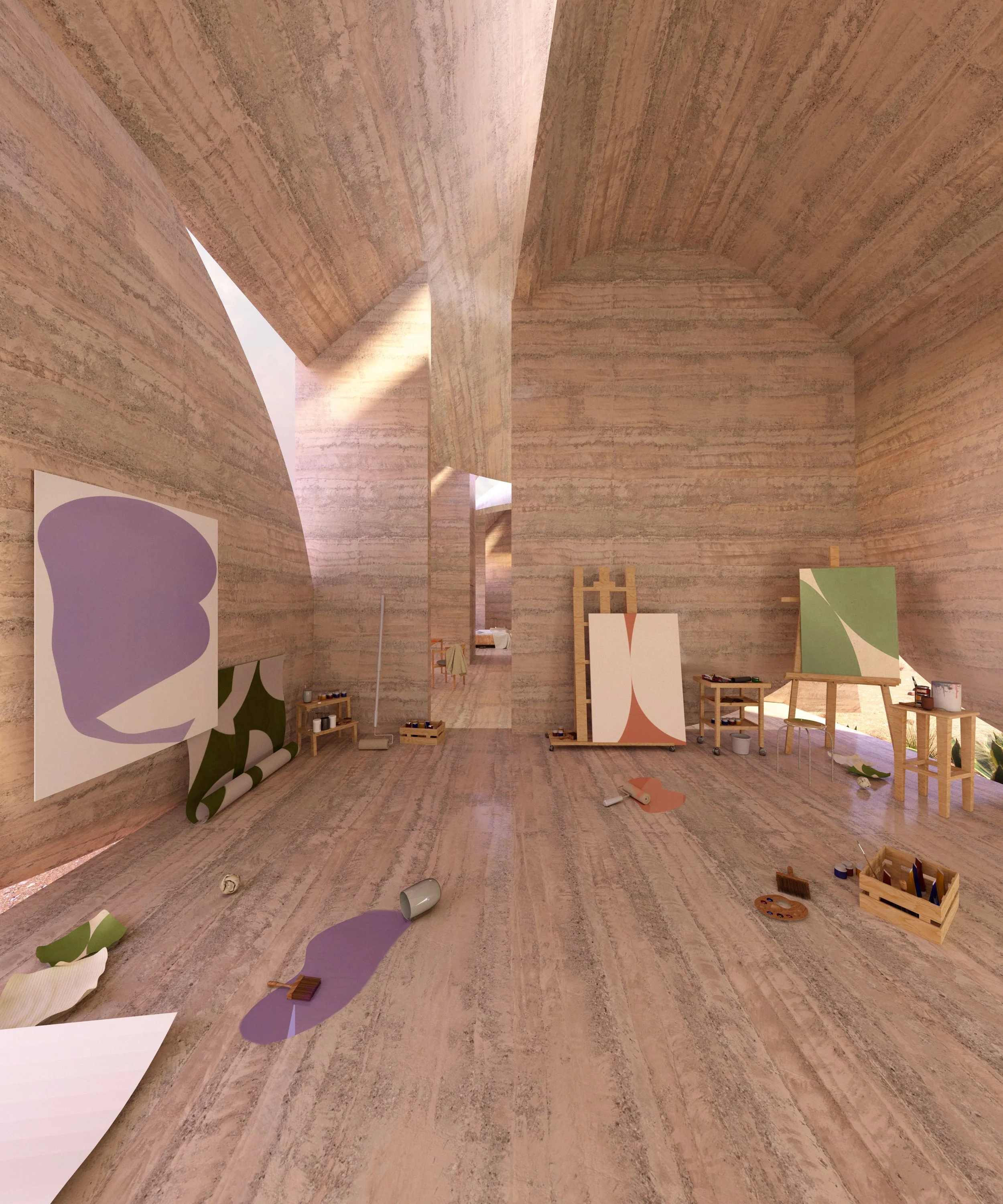
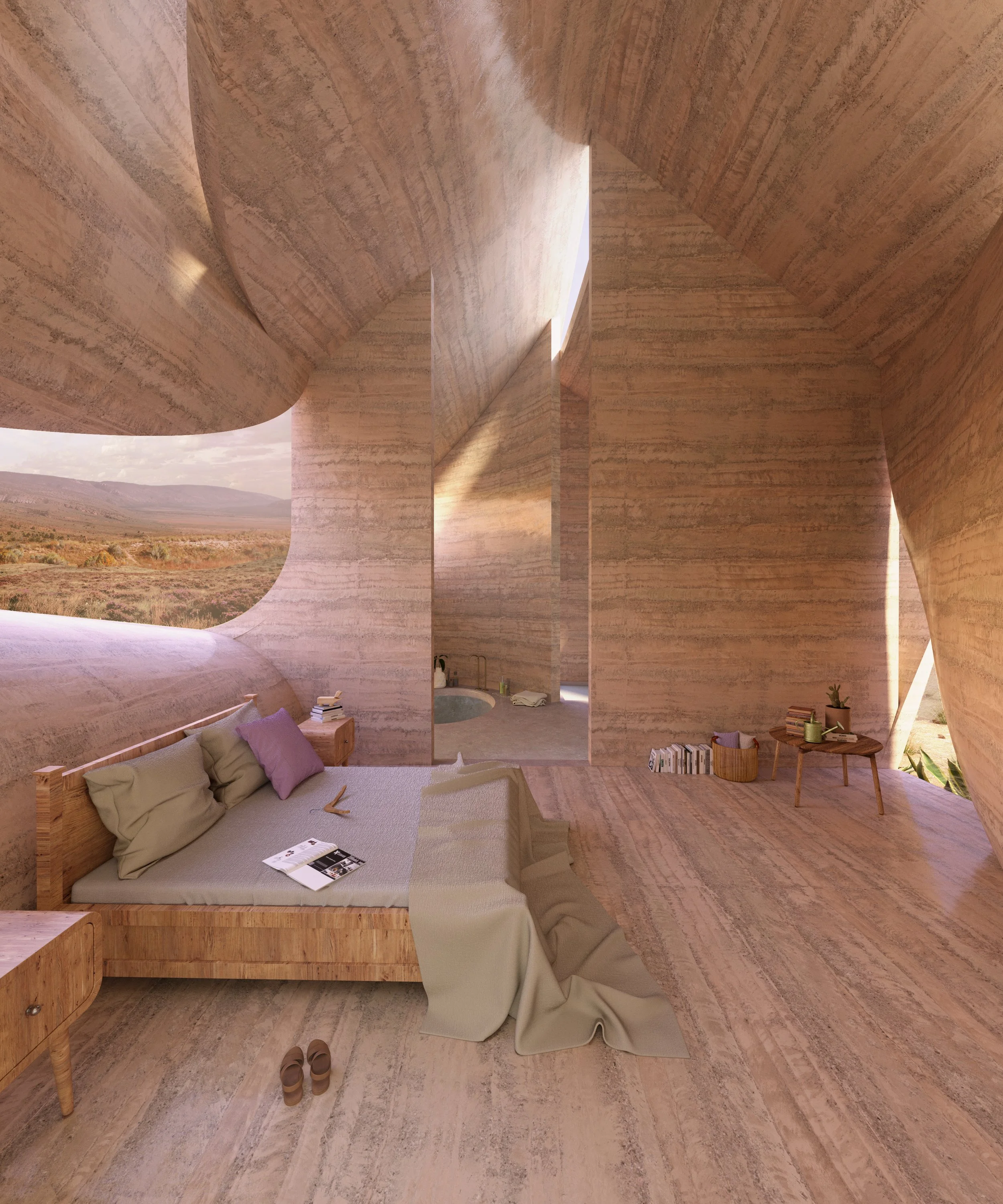
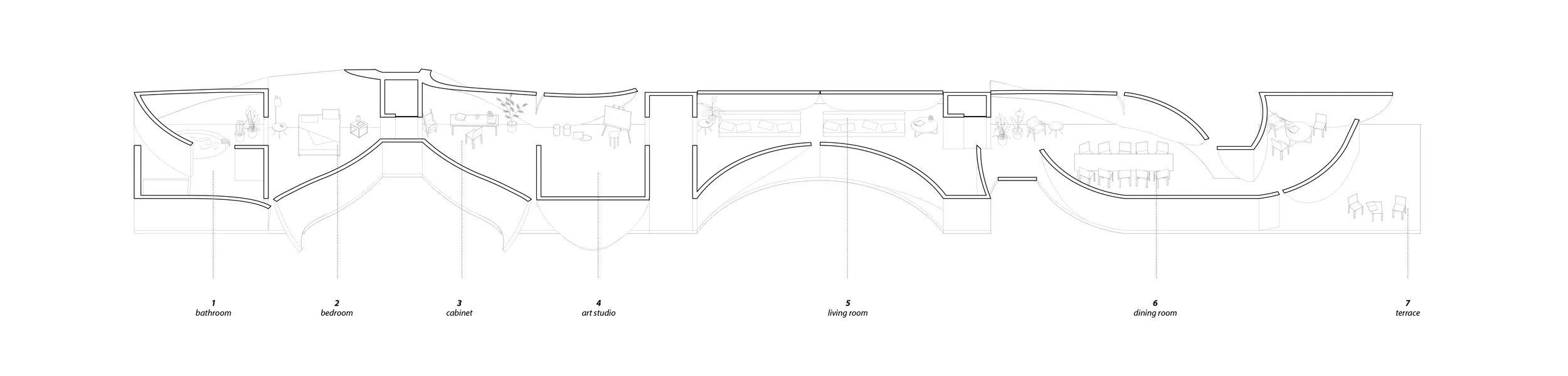
An artist’s house, located in the rural landscape of La Paz and surrounded by monumental mountain peaks, reconsiders the role of windows and skylights in shaping interior space. Using rammed earth as the primary material, the design explores a malleable approach to form, function, and light. The project investigates how rammed earth can be sculpted to produce expressive geometries, and how these forms can modulate and amplify daylight. Surfaces operate in continuous dialogue—solid and open, straight and curved—guiding how light enters, reflects, and moves through the space over the course of the day.
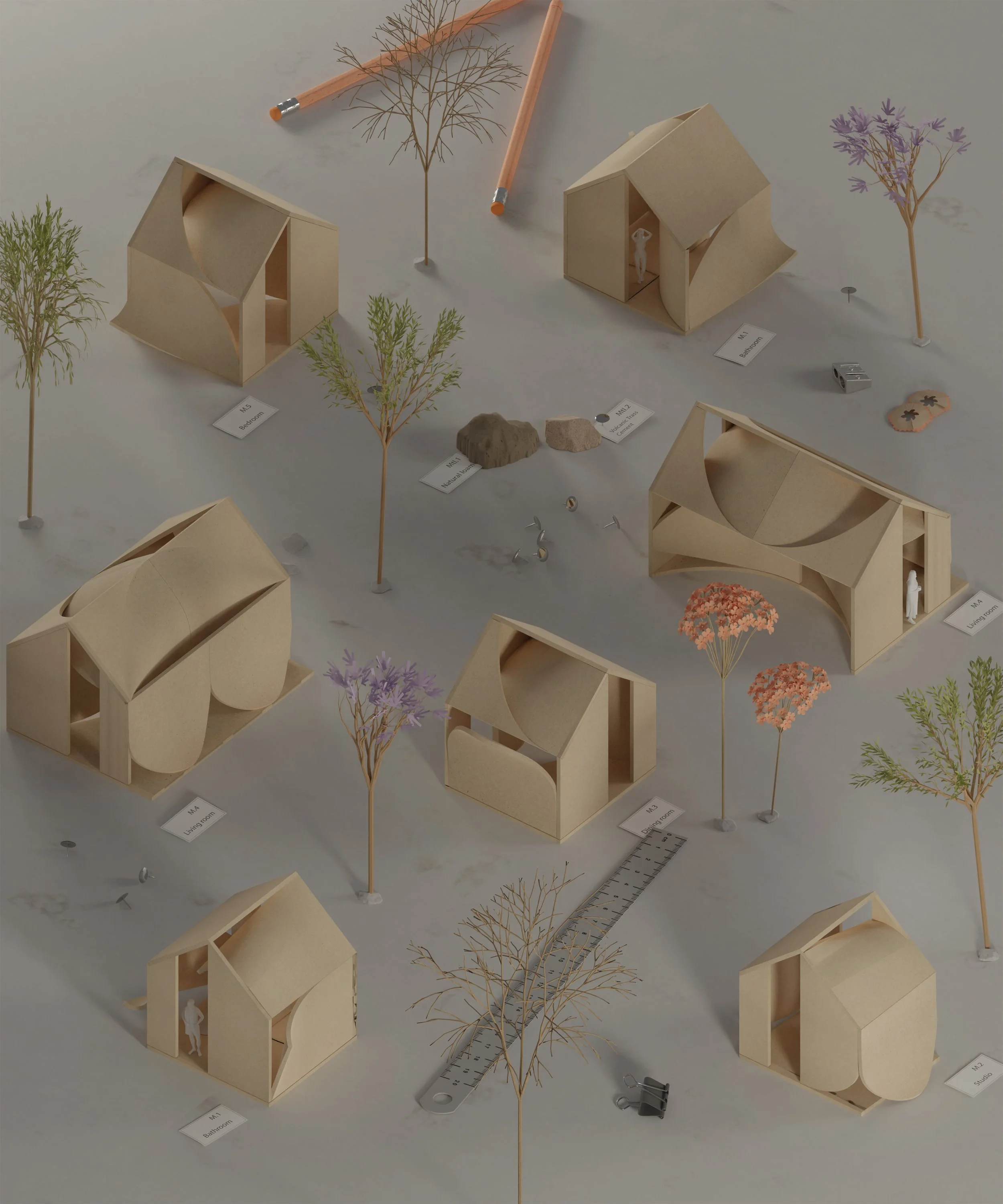
‘ A few forces applied ’ - Deformation experiment
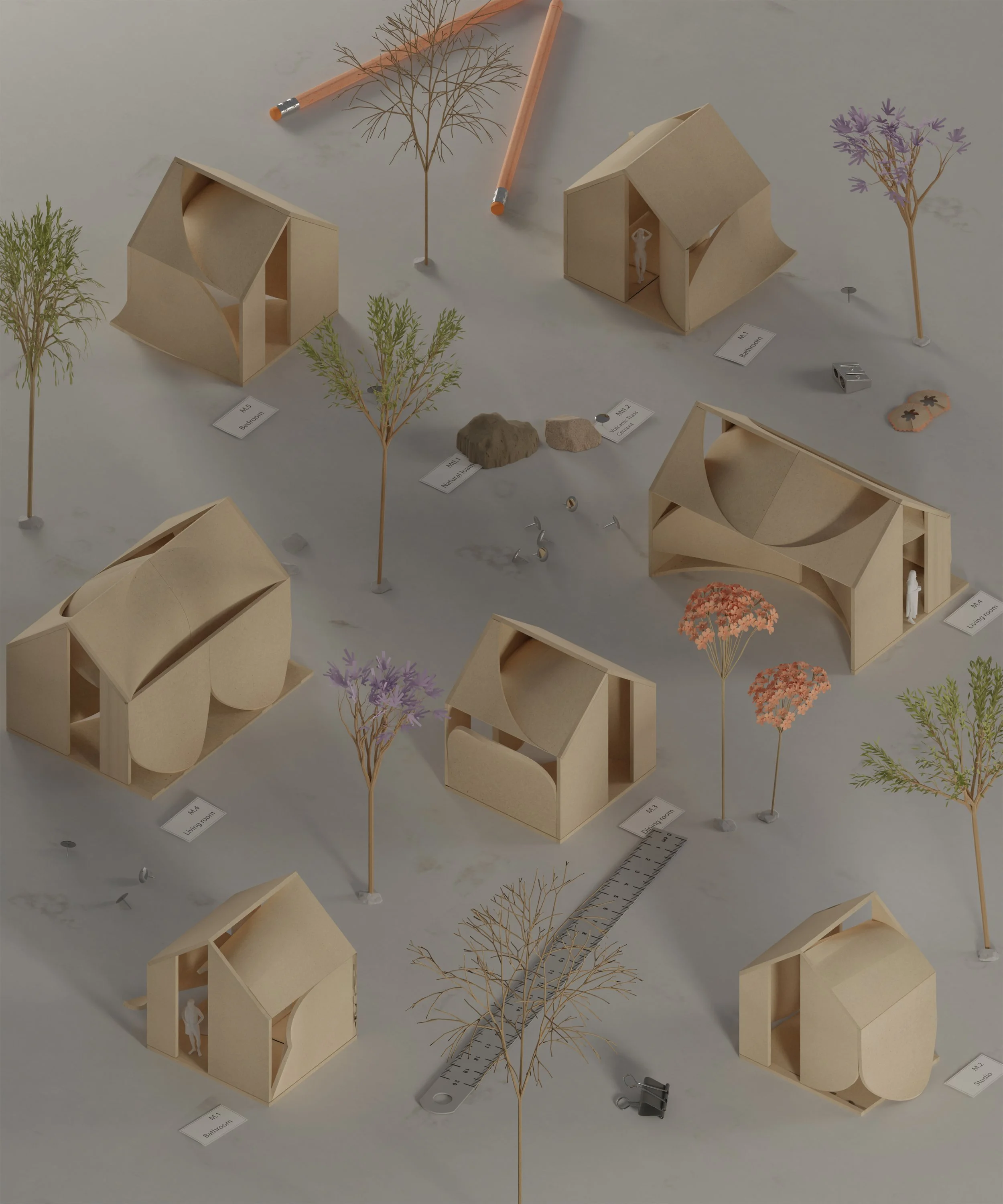
Targeted forces are applied to wall and roof elements to generate a range of solid transformations. These deformations are explored as a spatial design tool, reimagining rammed earth as a more malleable material.

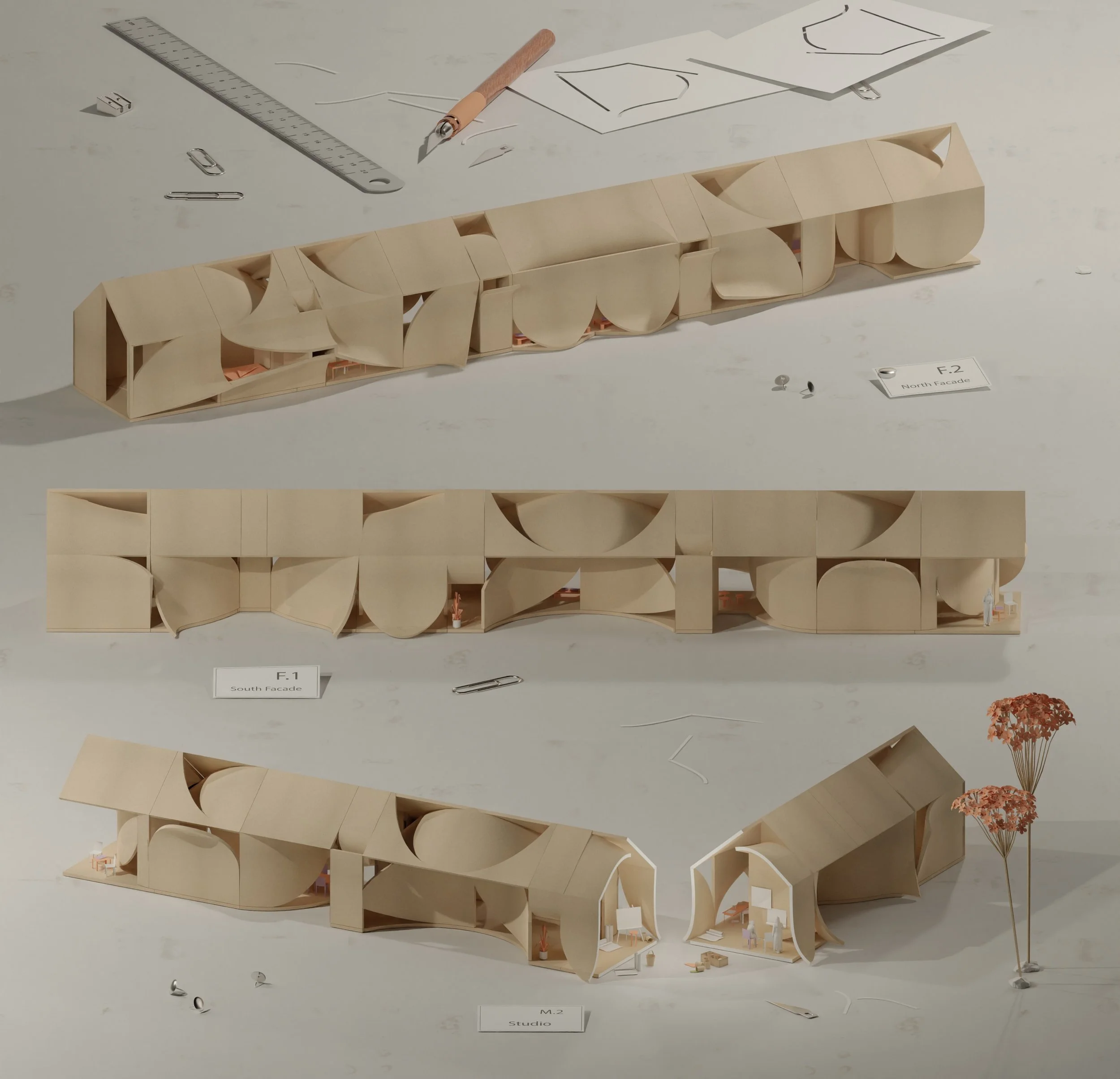
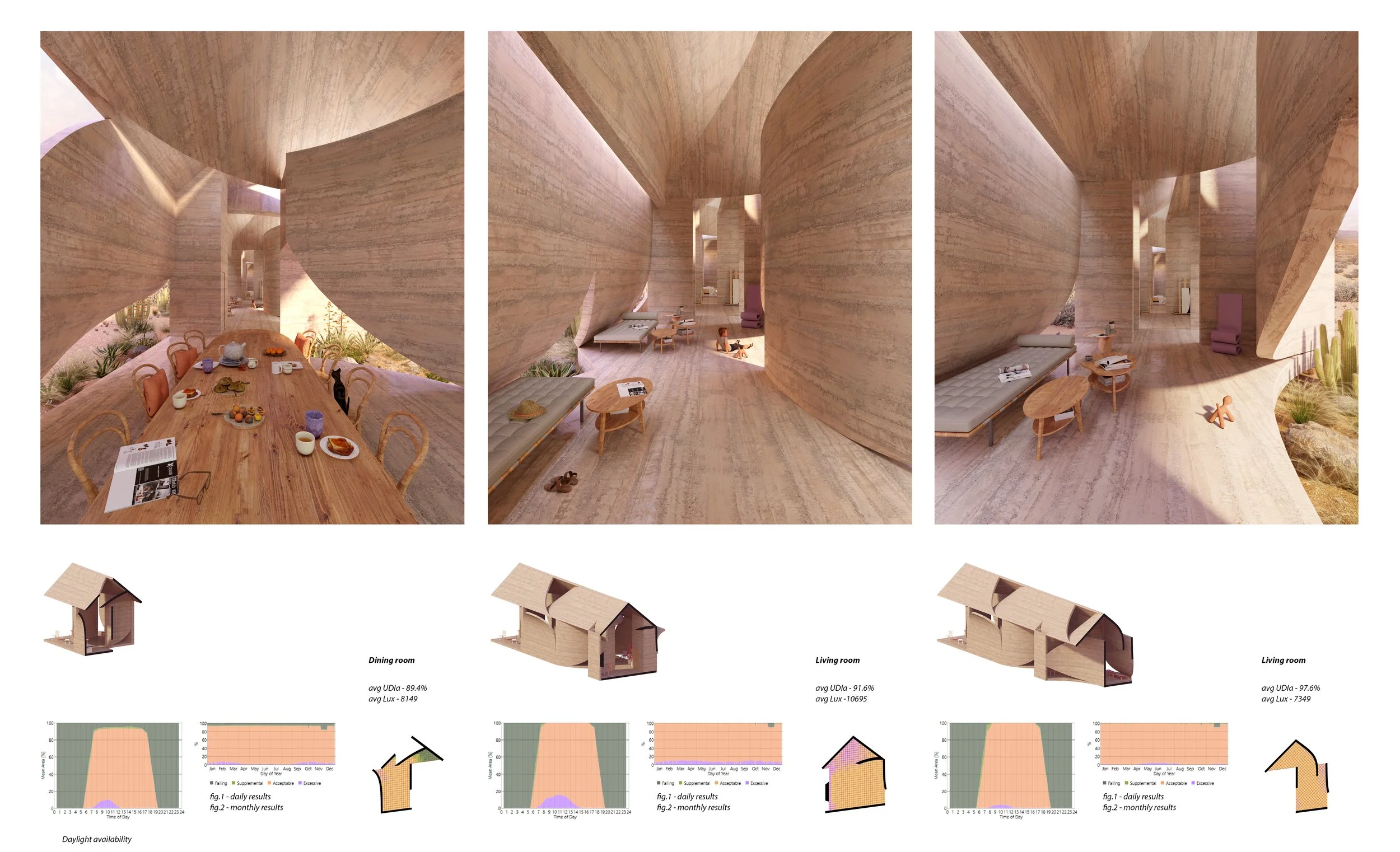
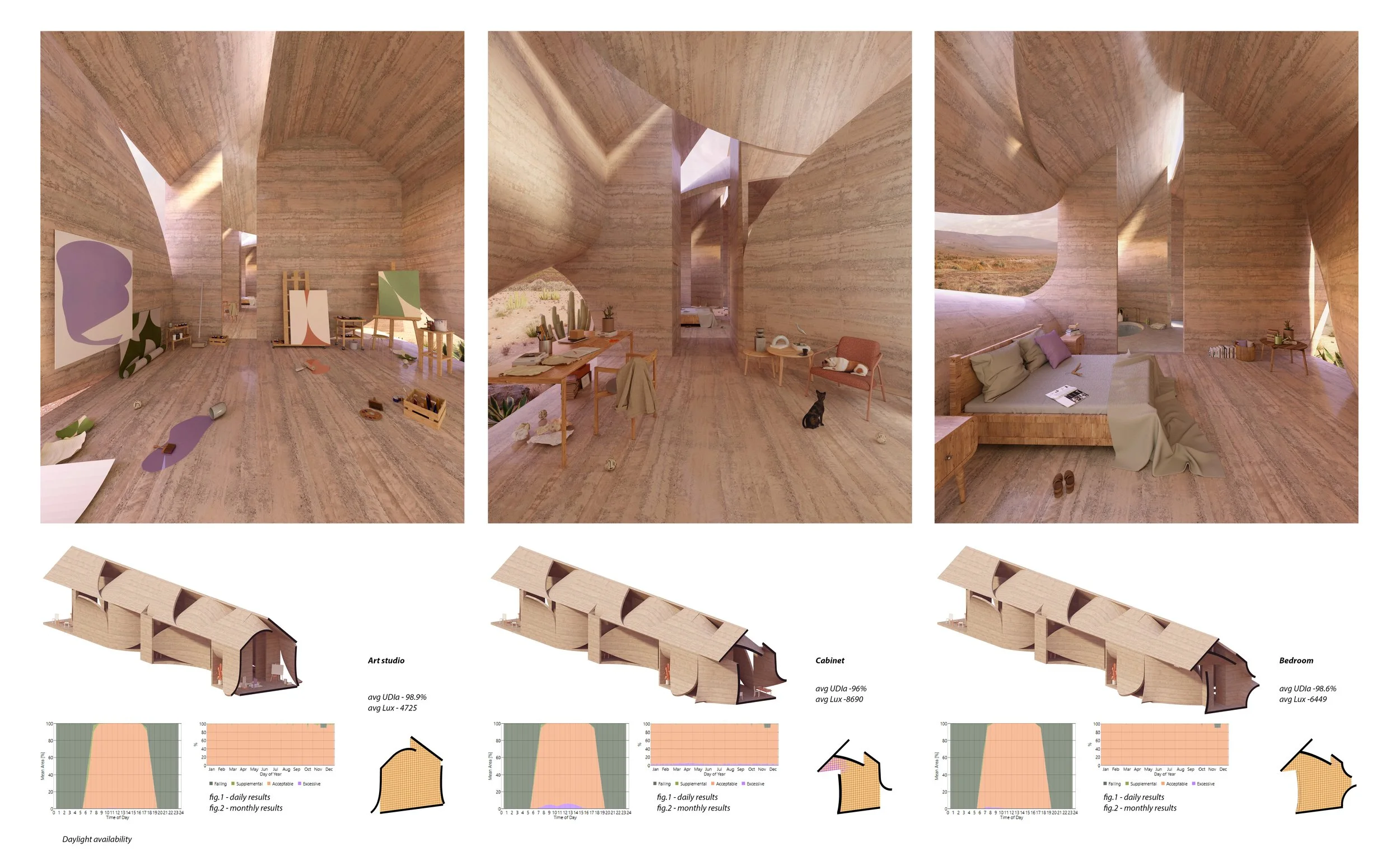
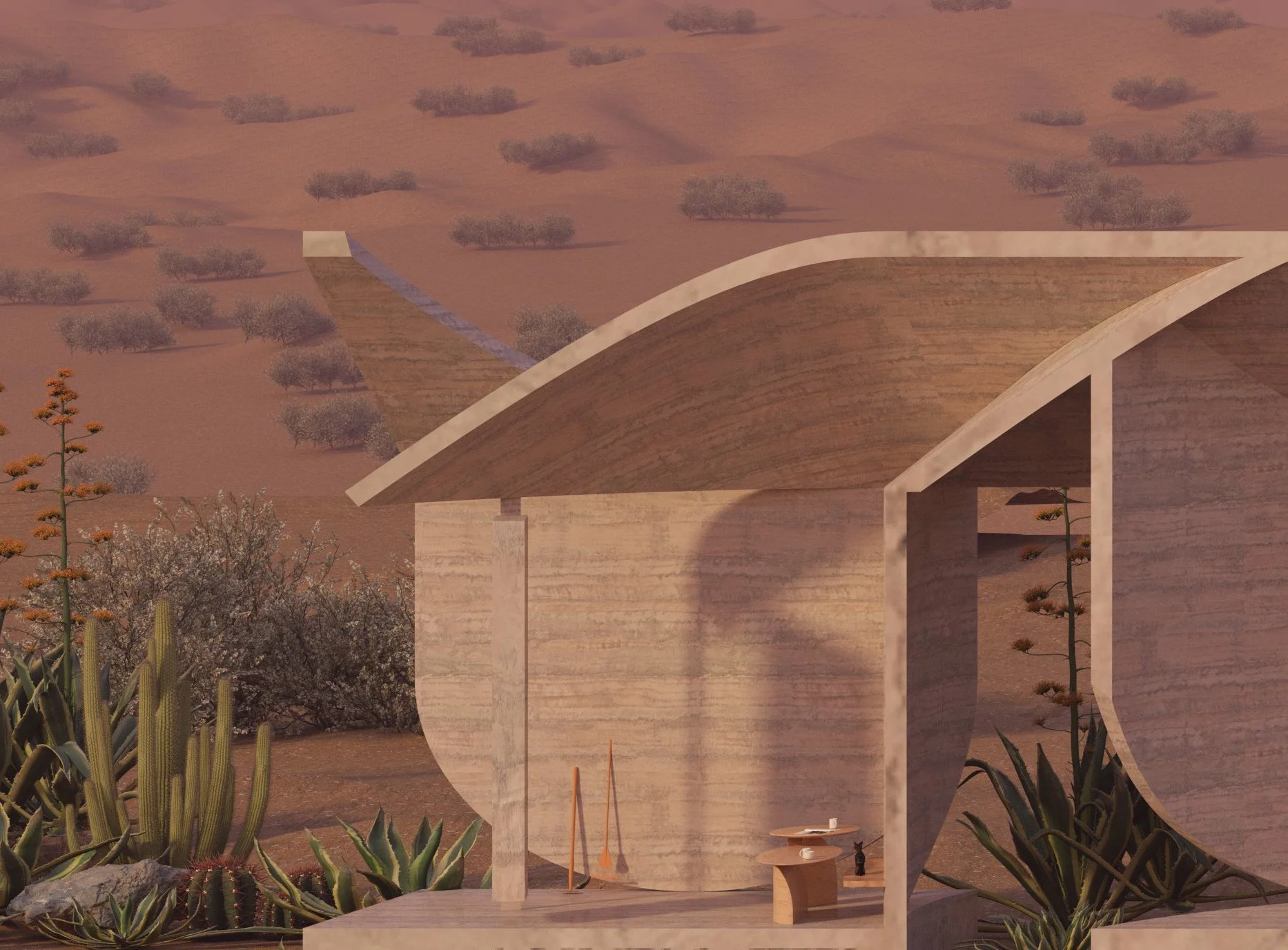
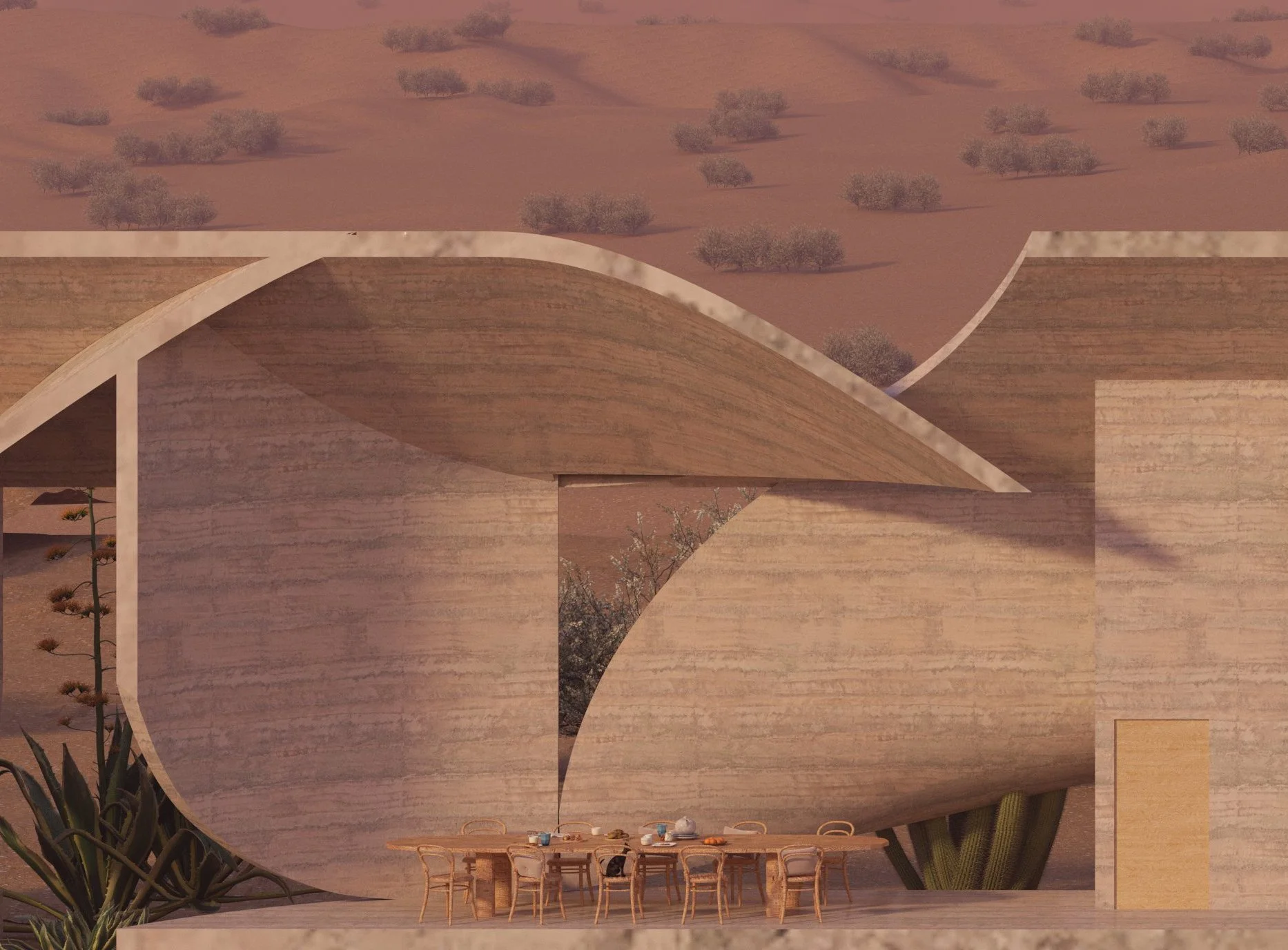
The south façade (Fig. 1) is designed to block intense direct sunlight while allowing light to reflect and diffuse across its surfaces. In contrast, the north façade (Fig. 2) incorporates a series of horizontal and vertical openings that frame views and introduce even, ambient illumination. Daylight simulations (Figs. 1–6) demonstrate the effectiveness of this strategy.
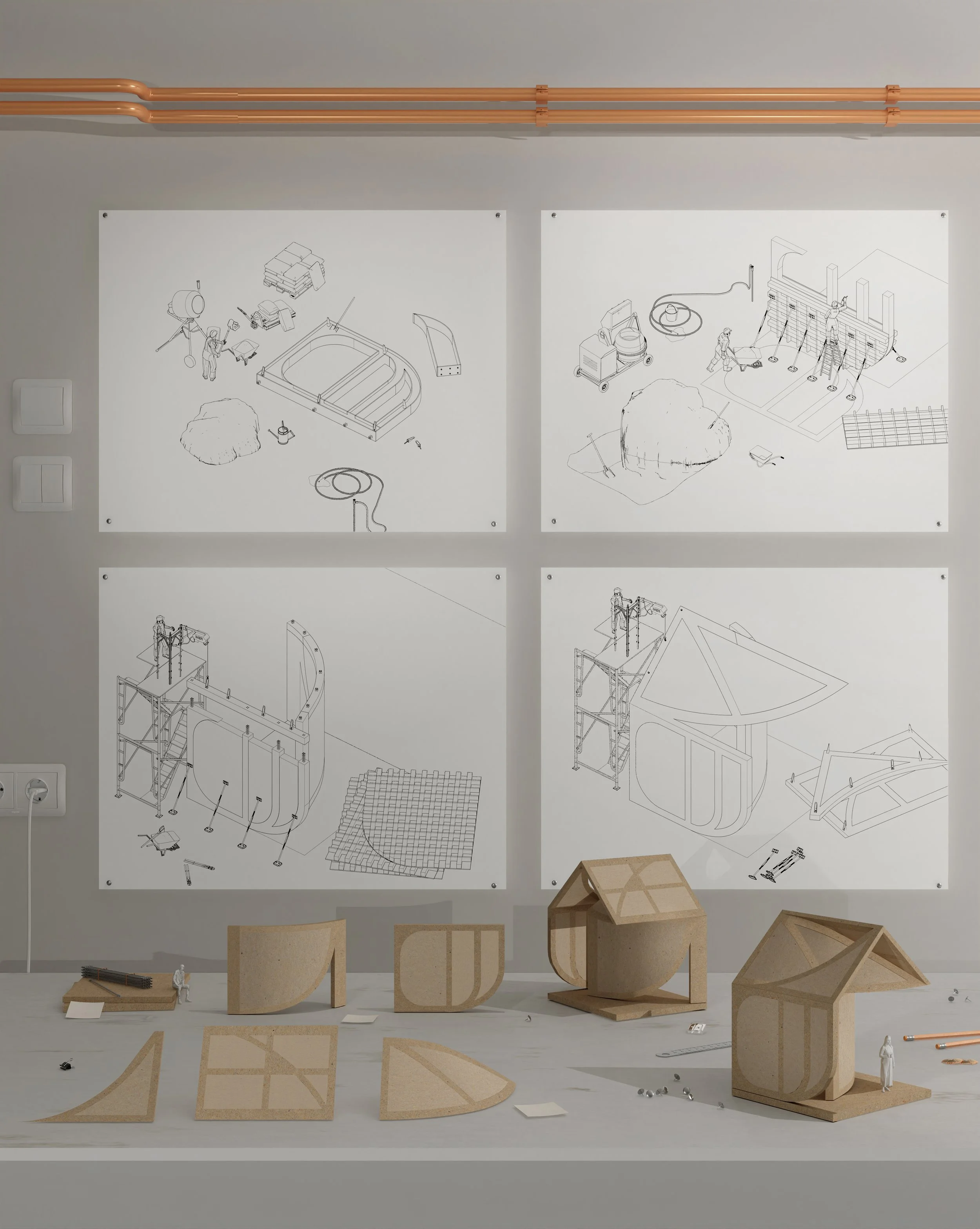
Roof and wall parts
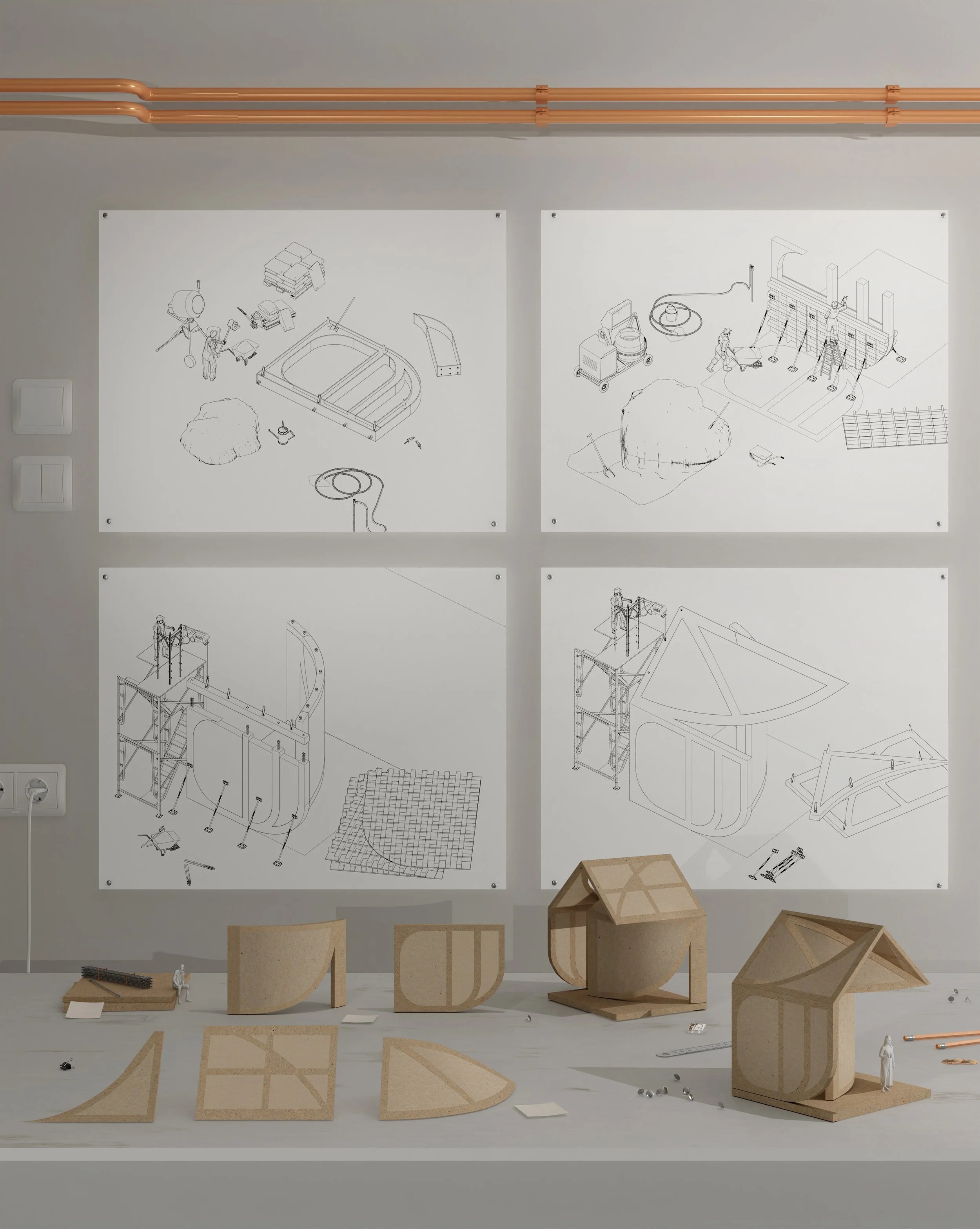
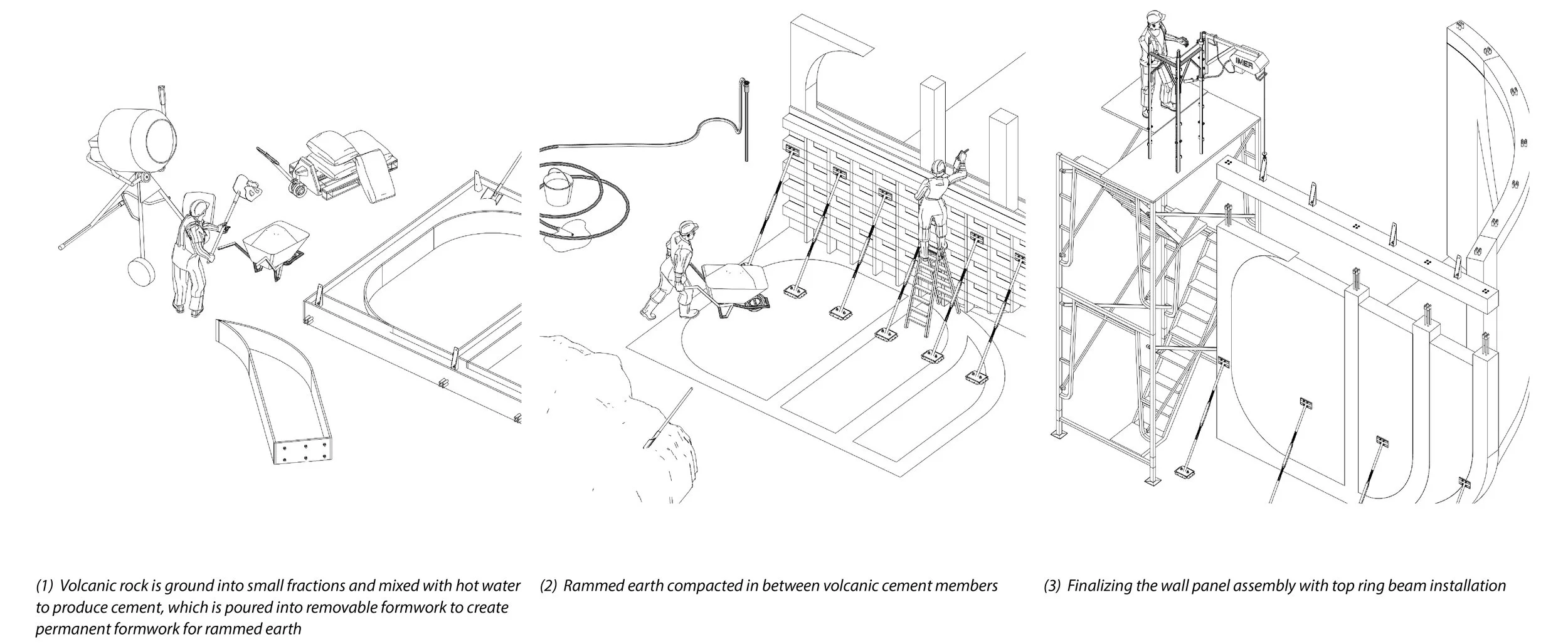
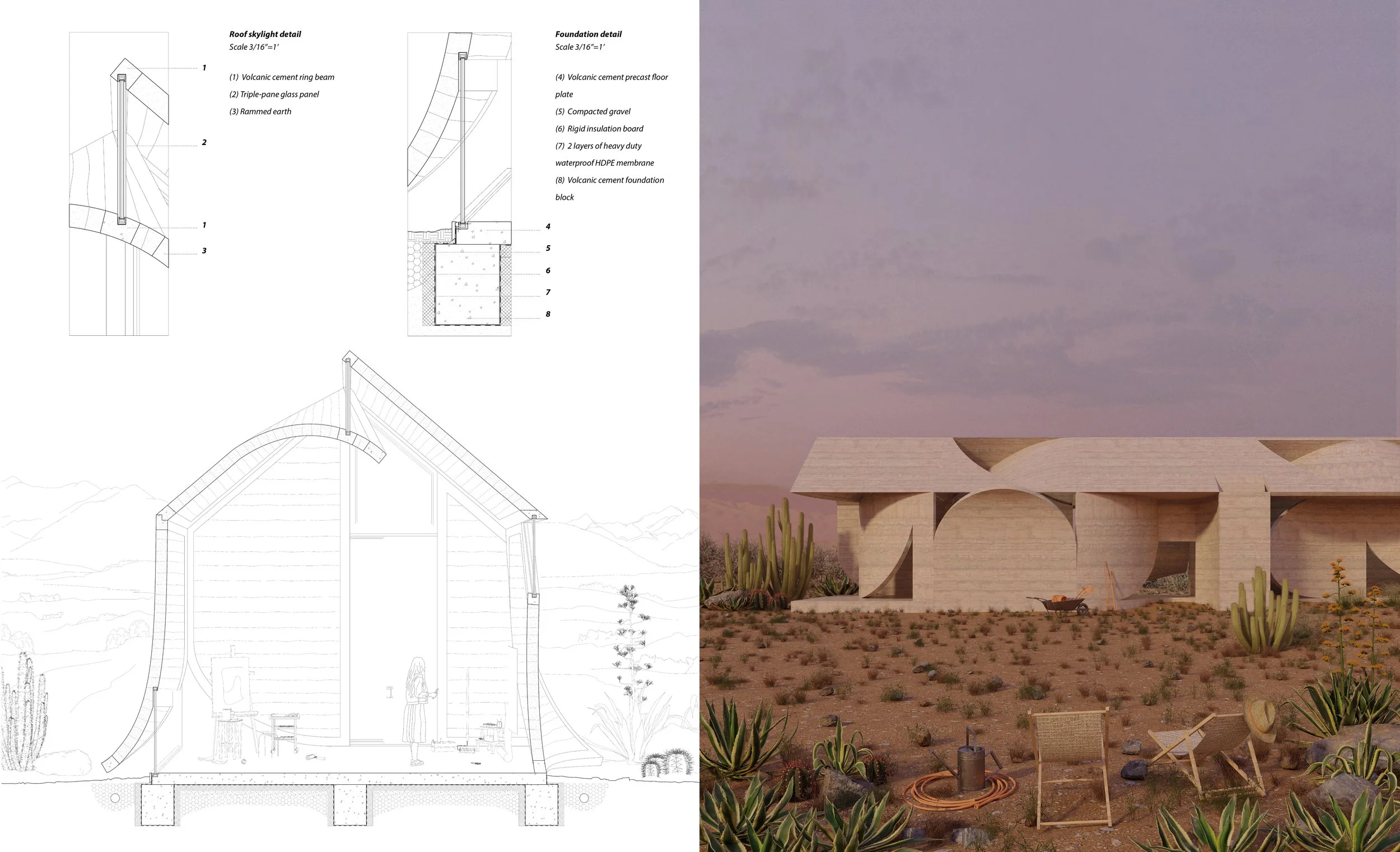
The project uses rammed earth as the primary construction material to reduce its carbon footprint. Natural loam is compacted between reinforced ring beams and vertical members. These vertical elements are made of volcanic cement with recycled plastic mesh reinforcement, providing structural integrity, flexibility, and strength.

Panel mock-up
Darker tone volcanic cement structural formwork and rammed earth fill-in
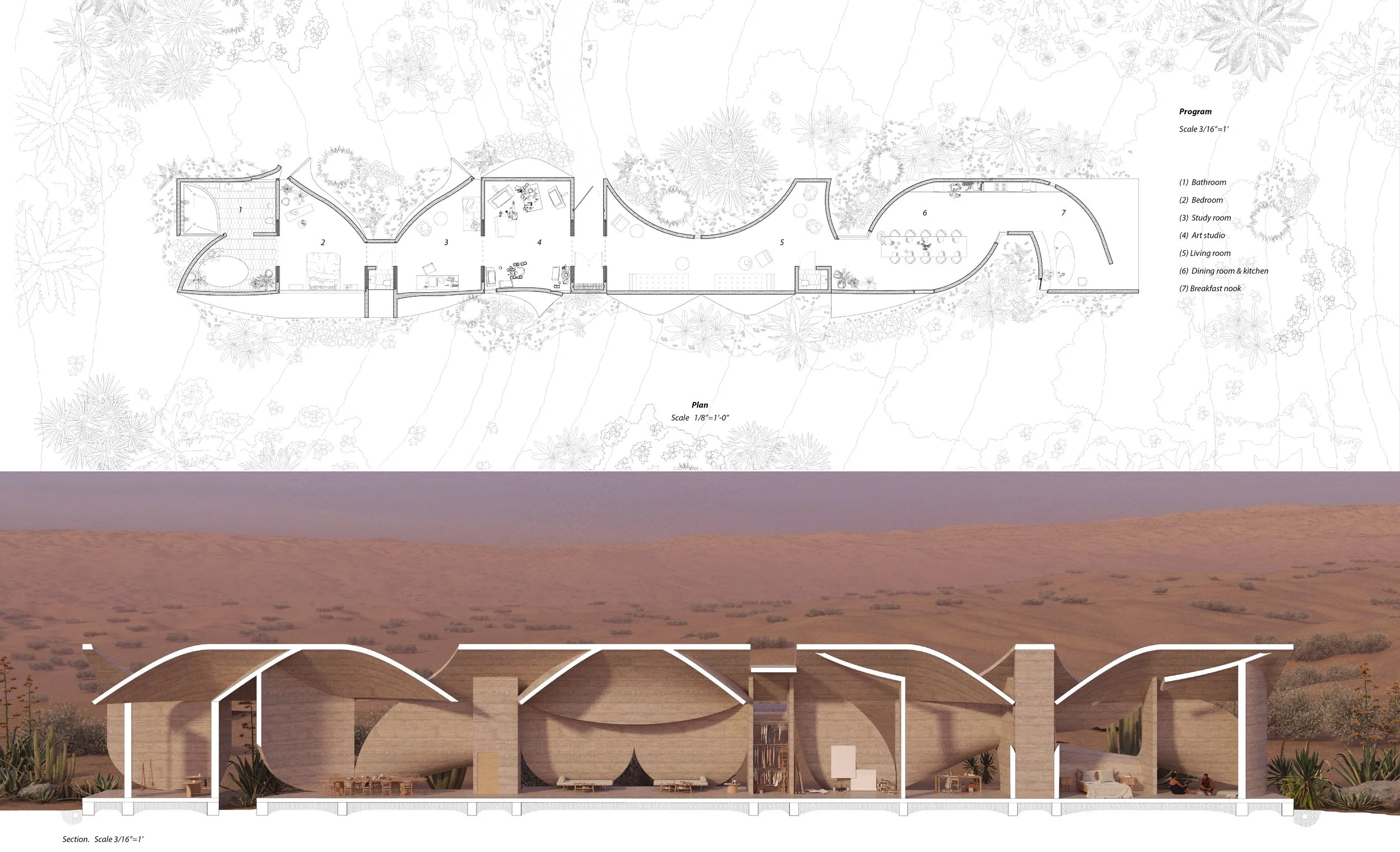
The south façade is designed to block intense direct sunlight while allowing light to reflect and diffuse across its surfaces. In contrast, the north façade incorporates a series of horizontal and vertical openings that frame views and introduce even, ambient illumination. Daylight simulations (Figs. 1–6) demonstrate the effectiveness of this strategy.
Daylight Simulations Index:
avg UDIa - %
avg Lux -value